Colonial Tea (Because Research)

I haven’t talked much about it here, but if you follow my socials, you know I’ve done a major deep dive into the American Revolution to prep for a future historical romance (which is plotted in its entirety, I just haven’t written a word of it yet).

It’s actually been an interesting road, because even though I thought I knew a lot, I really knew hardly anything. So y’all can look forward to some mini history lessons in the future.

But because I like to be thorough, this also means I’m embarking on a couple of immersive research paths. This will include historical sewing (which I attempted to get into about thirteen years ago), once I learn how to actually sew, and historical foods and drinks.

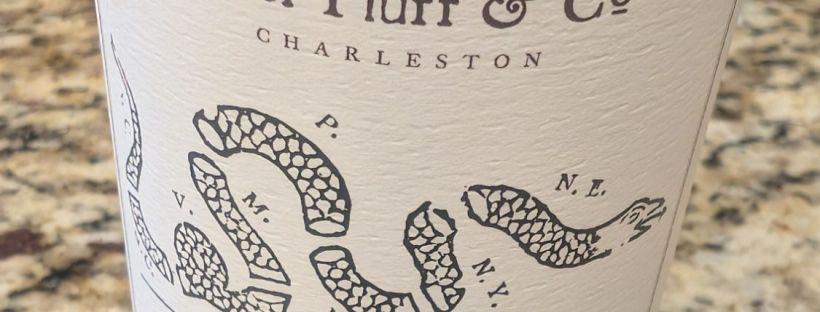
To that end, I caved to curiosity about an ad that kept popping up on Facebook for Oliver Pluff & Company. They are a small business out of Charleston that specializes in teas, coffees, and other beverages inspired by the Colonial and Early American eras.

Like, we’re talking historical teas. The teas that fueled the Revolution. The literal types of teas thrown overboard in the Boston Tea Party in 1773.

Of COURSE I had to buy some.
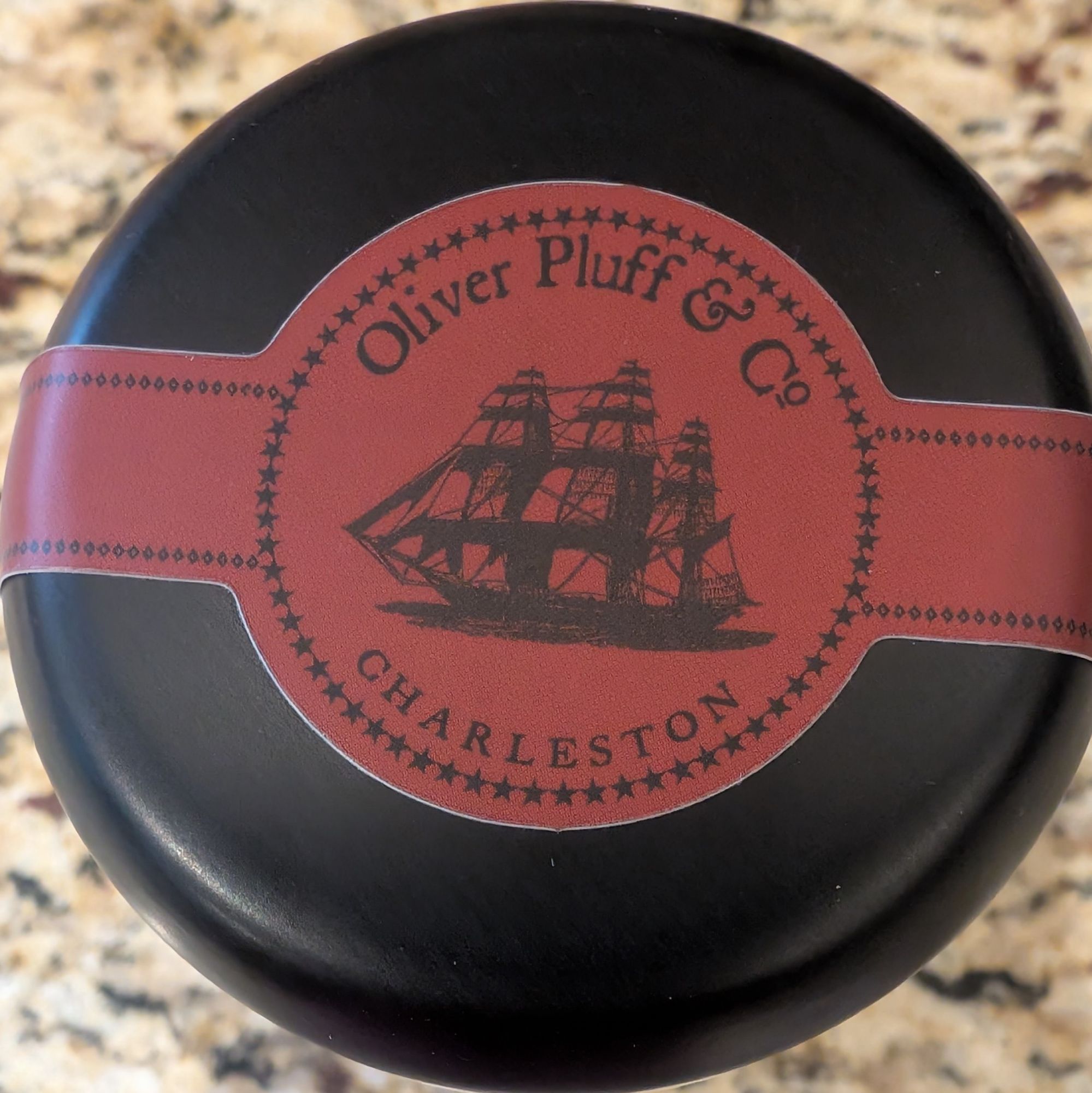
For research.

Disclaimer: I am in no way being compensated by Oliver Pluff & Co. for this post. In fact, I am compensating them for their historical awesomesauce. But they did like my Instagram posts about their tea!

To ensure that my research started off on the right foot, I decided to get their “Taste of the Colonies Trio”, which is a tin each of cacao tea, coffee (mostly for my husband, but I will have to try a small cup), and Bohea tea.

So far, I’ve tried the Bohea, and I have thoughts.

You could literally write books about how tea and the tea trade influenced life in the thirteen British colonies (and people have, in fact), but for the sake of relative levity, I’ll try to give a short-ish overview.

Tea was first introduced in the colonies in the 1640s, thanks to Dutch traders bringing it into New Amsterdam (the future New York). At first, it was primarily a drink for the wealthy, because it wasn’t exactly cheap. I mean, it had to come all the way from China – the only place in the world (at the time) where it was natively grown. The British would eventually introduce tea, as a crop, to India, but for our purposes, China was the source.

Once the British gained control of Dutch holdings in what is now New York, tea and teatime became even more entrenched as a social must-have for the upper classes. The traditions of British afternoon tea and all its accoutrements soon crossed the Atlantic Ocean and became a major element of colonial life.

The East India Company (EIC) became the primary (aka sole) purveyor of tea in Britain and it’s colonies, but while its availability increased, its price made it something only middle class and wealthy colonists could enjoy on the regular. Obviously, anyone not part of the wealthiest echelons of society wasn’t serving tea in expensive silver pots or anything like that. But it did spawn a whole market for tea-related items, from kettles to creamers, even “tea water“! By the 1720s, tea consumption in Britain’s North American colonies had reached into the millions of pounds annually.

As students of history know, tea became a flashpoint for the growing tensions between the colonies and the Crown.

Skipping (for now) a lesson on the various Parliamentary acts put into place in the decade after the close of the French & Indian War, all of which were intended to help refill Britain’s exhausted coffers by taxing the North American colonies for the first time, and the subsequent war cry of “No Taxation Without Representation”, it’s important to know that the tax on tea was the sole tax that remained on the books by the time of the Boston Tea Party in 1773.

The tax itself was actually relatively small, but it was the principle of the thing!

Even before the “tea parties” in Charleston, Philadelphia, and Boston (yes, there was more than one tea party), calls went out to boycott the teas imported by the EIC, and this actually became one of the most visible ways colonial women could demonstrate their political leanings. But colonists certainly didn’t want to give up the ritual of afternoon teatime, so substitutes of various sorts, commonly just referred to as “liberty teas”, began gracing the tables of Patriot-aligned households.

Bohea is a type of tea grown in the Wuyi Mountains of China. (Dutch traders misprounounced Wuyi as “boo-hee”, and it was then written out as Bohea.) Oddly, this was considered one of the lowest grades of tea available for trade, but it became extremely popular in Britain and then its colonies. In fact, the majority of the tea thrown in the Boston Harbor on December 16, 1773, was Bohea.

The way it was (and is) prepared for packing and shipping involved letting the fresh leaves dry in the sun and air before then being further dried over pinewood fires. This resulted in a particular scent and flavor that even contemporary 17th and 18th century tea purveyors and consumers described as “smoky.”

And this is the tea I decided to try from Oliver Pluff & Co.
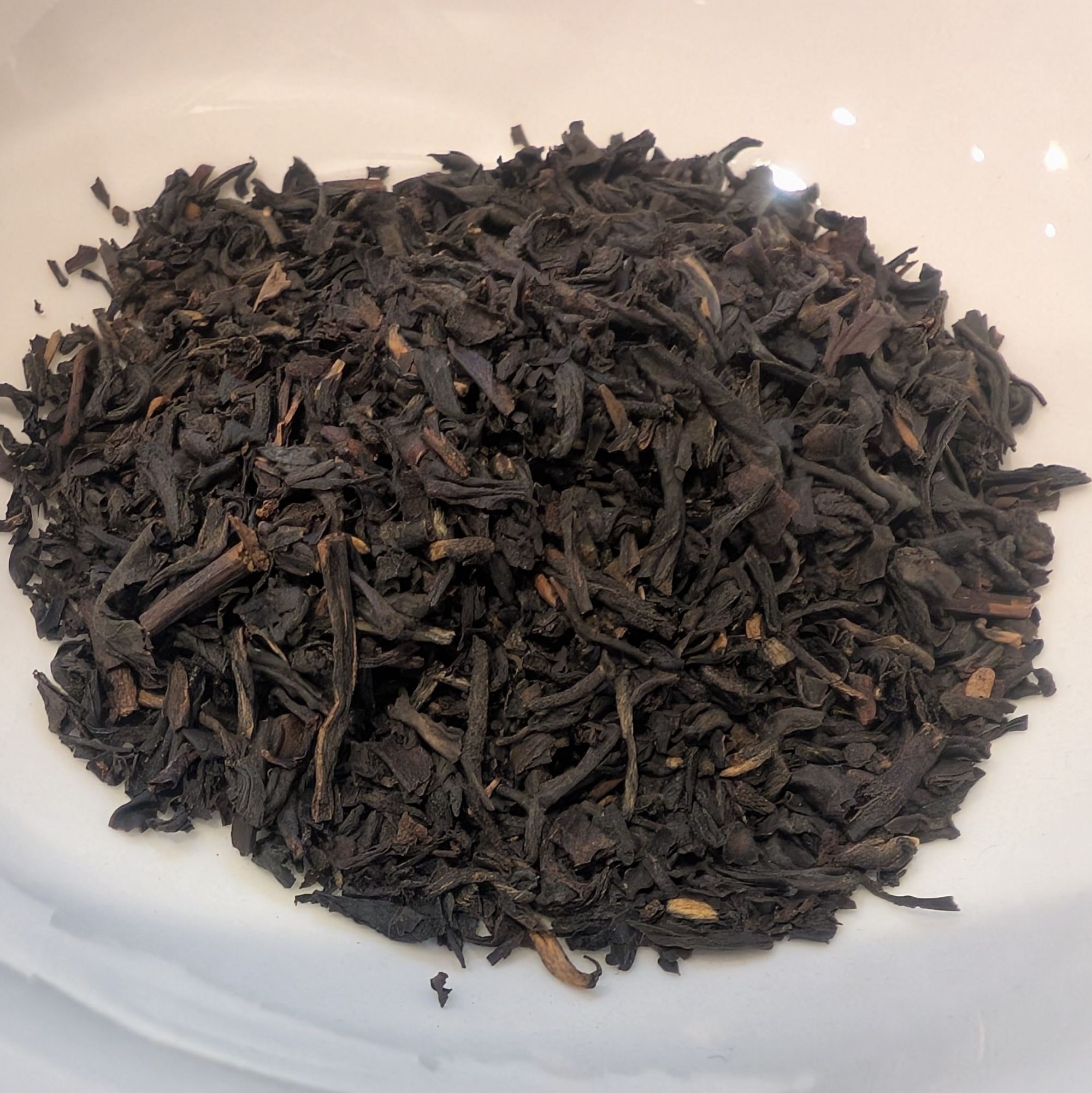
I will be honest… My first impression when I opened the tin was that this tea has a STRONG aroma. And flavor.

My 11 year old said it smelled like bacon. I thought it smelled like when my father-in-law has his woodstove going in the wintertime.

So not a bad smell, but definitely not what I was expecting, especially since I’ve been pretty much drinking nothing but Twinings Darjeeling every day for the past eight years.

Teas are not all the same.

Anyway, because I wanted to give this tea the benefit of the doubt, I did a little more research and learned a few more facts about Bohea.

For one thing, the timeline from harvest to colonial tea table in the 1700s could potentially be up to three years long. So it’s entirely plausible that when colonists were cracking open their tins of tea in the 1760s and 1770s, the scent and flavor had very much mellowed out. (Consider how much fresher my tin of Bohea is, and you can imagine the difference.) In any case, it was a favorite and definitely praised as having a smell and flavor that “exceeds almost any ever imported”, according to an ad in the Providence Gazette in 1773. (Perhaps the advertisers were just trying to sell a product, but it had to have been somewhat true or it wouldn’t have been in such high demand.)

One would assume that my tin is going to mellow over time as well, so this is a bit of an ongoing experiment. After about three weeks of drinking this tea and fiddling with water temperatures and sweetening, I do have to say it’s grown on me. In any case, it’s definitely a cool experience to be able to drink a tea that, in its own way, contributed to American Independence.

Okay, maybe that’s a bit of an exaggeration. But it’s still interesting to drink the same kind of tea colonists were drinking in the years leading up to the Revolution.

The Non-Fiction Book Everyone Should Read and Why (Wednesday Weekly Blogging Challenge)

This week’s topic for the Wednesday Weekly Blogging Challenge from Long and Short Reviews is the non-fiction book everyone should read, and why they should read it.

My choice will probably come as no surprise for anyone who has followed my blog for any great length of time.

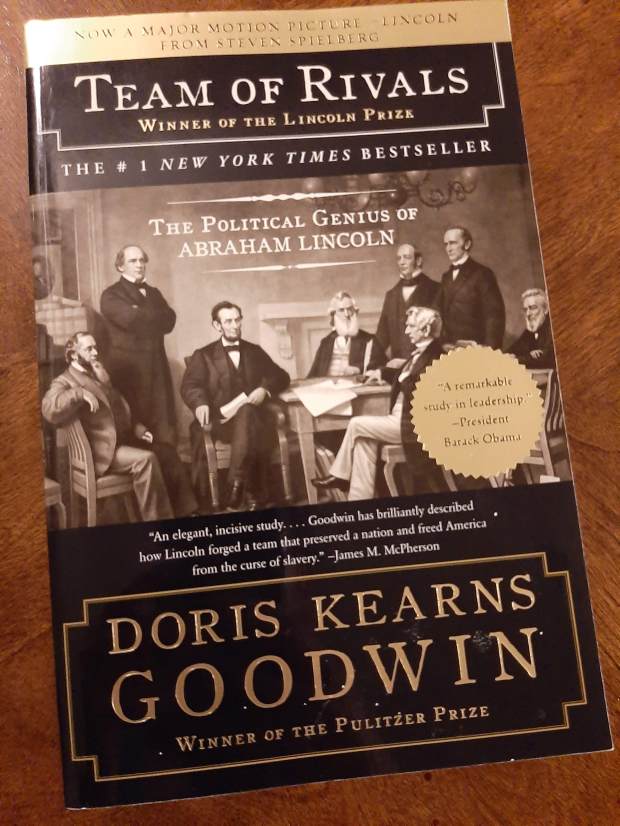
Team of Rivals: The Political Genius of Abraham Lincoln by Doris Kearns Goodwin

I’d heard about this book long before I ever read it, but didn’t have a copy of my own. I just added to my To-Read list and plugged along with other things related to history, etc. After the movie “Lincoln” came out in 2012 and I learned that the movie was based on the last several chapters of this book, I decided it was time to sit down and read it.

This book is a must-read for every Lincoln enthusiast, for every student of the American Civil War and American history.

And it is a must-read for every American. Especially right now.

Goodwin’s tome (yes, the thing is like two and a half, maybe three inches thick) is a hefty, time-consuming read. But it’s worth it. It’s imperative. Goodwin, as with all of her work that I’ve had the privilege to read, provides amazing historical detail, context, and copious references, while managing to make this academic magnum opus read almost as a narrative at times.

This is not just about Abraham Lincoln, or about his presidency and the things he did during the Civil War and his tenure in the White House. Goodwin takes us back to the very beginning, to Lincoln’s childhood and formative years. She paints a vivid picture of his development as a lawyer, statesman, and eventually leader of a country bitterly divided over the stain of slavery.

This is also a book about the men who will become integral members of his cabinet – William H. Seward, Salmon P. Chase, and Edward Bates – after losing the first Republican primary to Lincoln in 1860. We learn about these three men alongside Lincoln, how they came to the political fore, and most importantly, why Lincoln brought them into his inner circle when he gained the presidency. Goodwin weaves the ins and outs of the political convolutions Lincoln brilliantly (IMHO) executed in order to steer the country toward not just the salvation of the Union, but the passage of the 13th Amendment to the Constitution.

But she doesn’t stop there. As is true today, the wives of these four powerful men had their own intrigues and social workings that mirrored the drama playing out on the political stage, both in public and behind closed doors.

We also get to learn about the maneuvers Lincoln used with members of Congress, the evolution of his stance on equality for Black Americans, and the inner turmoil and private sufferings of a man who presided over the deadliest conflict in this country’s history. At the last, Goodwin shows us the immediate aftermath of Lincoln’s assassination just days after Lee’s surrender at Appomattox in such a way that the question remains – what would have happened if Lincoln had been able to serve out his second term in office?

America is on the cusp of an election that, in many ways, is not too different from the election of 1860. That election sparked a civil war that claimed the lives of an estimated 750,000 American men (per recent reevaluations of data) and fundamentally changed the definition of American citizenship and democracy. Team of Rivals may be daunting, but it should be read by every American who plans to cast a vote a month from now, as it illustrates with amazing detail how even bitter rivals can work together for the good of this country.

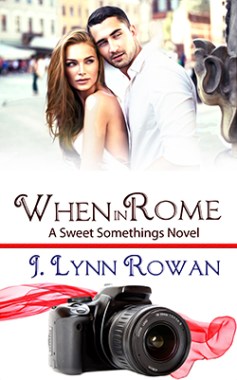
WHEN IN ROME Photo Travelog: Ancient Rome

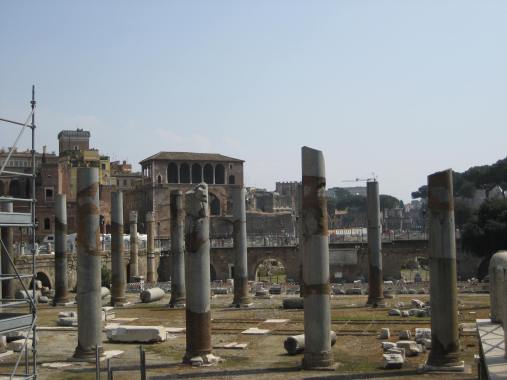
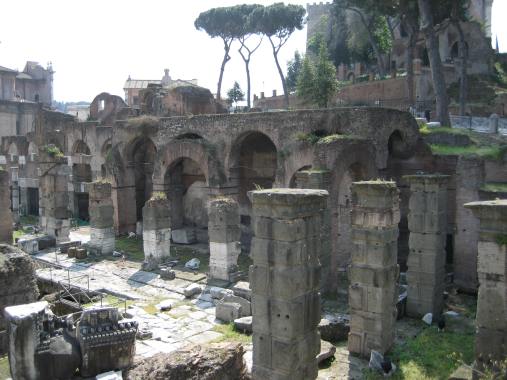
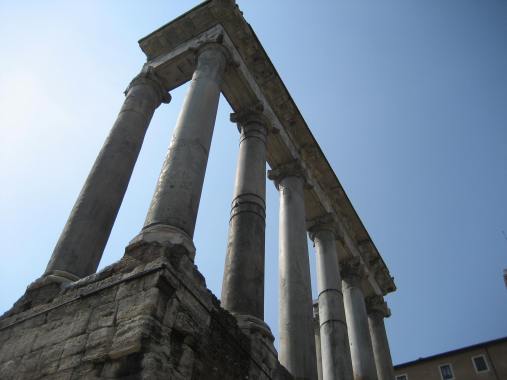
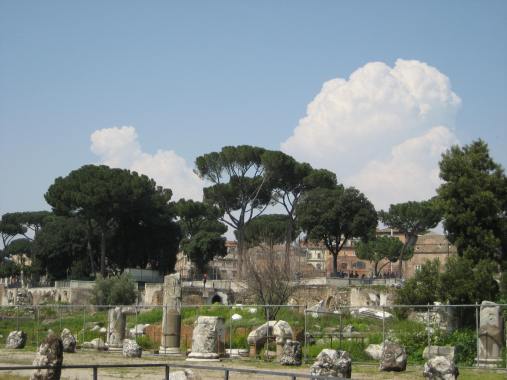
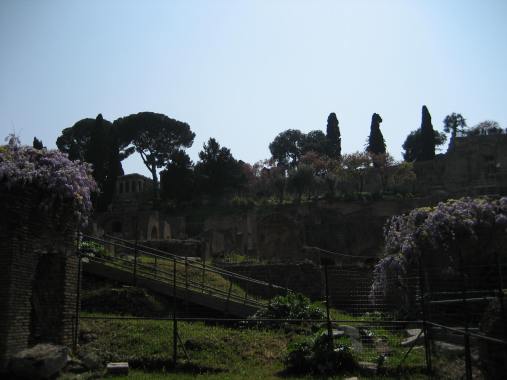
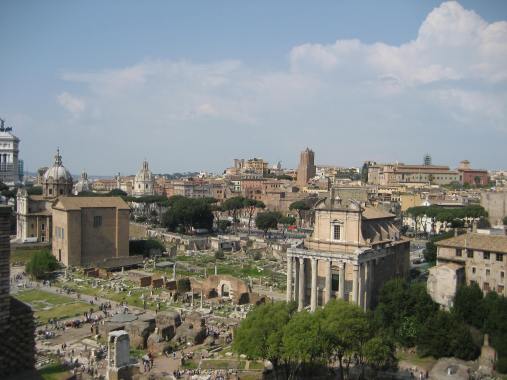
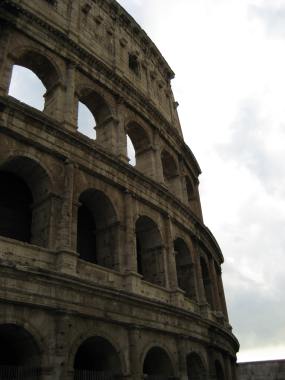
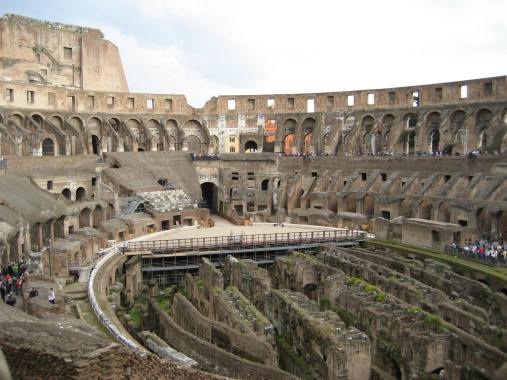
When the hubs and I went to Rome in April 2007, we spent our first full day puttering round  Ancient Rome, including the Coliseum, Roman Forum, and Palatine Hill.

Like us, WHEN IN ROME heroine Kate Miller explores the major sites. Our photos aren’t as good as hers would be (since we used a little digital point-and-shoot instead of SLR), but I hope you’ll enjoy them anyway. 🙂

Much of the Roman Forum has been left open to the elements, and outside of a few facades, much of it has been lost to history.

The Forum connects to Palatine Hill.

The view from Palatine Hill encompasses the Roman Forum and Coliseum.

The Coliseum itself is impressive all on its own.

Next time, we’ll take our tour through Renaissance era Rome, including Trevi Fountain, the Borghese Gardens, and a few other beautiful views of The Eternal City.

WHEN IN ROME is available now for Kindle – and don’t forget to check out BETTER THAN CHOCOLATE (now available in print from Amazon and Barnes & Noble), the story that started it all!

Three friends. A broken engagement. A surprise elopement. A big secret. A lot of chocolate.

Three friends. A broken engagement. A surprise elopement. A big secret. A lot of chocolate.

Love isn't always picture perfect...

Love isn’t always picture perfect…

Want to stay updated on announcements and upcoming releases? Join my email newsletter and follow me on my socials (Facebook, Twitter, Google+, Pinterest, and YouTube).


Appomattox – Not Really the End

It’s been a while since I’ve posted a mini-history lesson, and today, the 150th anniversary of Lee’s surrender at Appomattox, seems a worthwhile reason to provide one.

The Beginning of The End

For a good year before Robert E. Lee decided it was time to surrender, the Union and Confederate armies were essentially locked in nonstop combat. Consider the opposition: Ulysses S. Grant’s campaign in Virginia through the spring of 1864; Phil Sheridan’s cavalry actions that would later be known as “The Burning of the Shenandoah”; Sherman’s drive to capture Atlanta and the subsequent “March to the Sea” that marked the summer and fall of that same year.

The odds were seemingly stacked against an army that suffered from a lack of food and ammunition. There were no more reinforcements. Many civilians had had enough. The only thing the Confederate army really had left was guts and determination.

But by April 1865, Lee knew he didn’t have many options left. Johnston was still fighting in North Carolina, and in the far reaches of the Confederacy, armies were still holding out. But in Northern Virginia, Grant was closing in. Petersburg had fallen. The Confederate government had fled Richmond, destroying records and supplies as they went.

The Confederate army continued to make valiant stands through those early days of April, including a battle at Appomattox Courthouse itself. If they could get to the Appalachians, many believed they could continue fighting for years through what we would today term guerrilla warfare.

Lee made a tough decision.

He decided was time to ask Grant for terms.

Meeting at Appomattox to Discuss the End

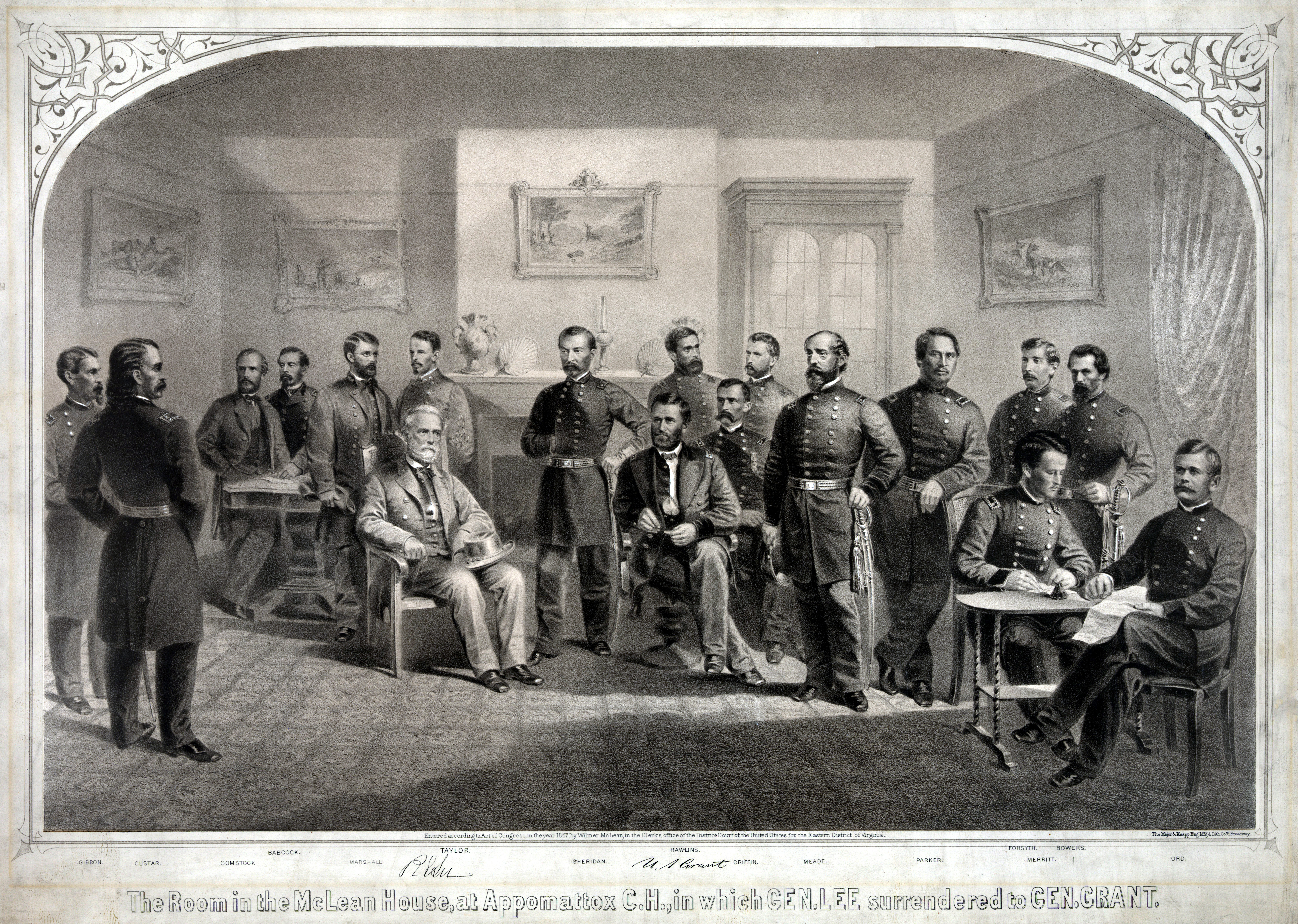
There’s a lot of legend surrounding the meeting of Lee and Grant at the MacLean house in Appomattox Courthouse. Yes, Lee did wear his best uniform. Grant did ride up and sit down with the famed Southern general with mud splattered boots. Whether or not Lee planned on surrendering that day is up for debate, but once he saw the terms Grant offered, he agreed to them.

Lee Surrenders to Grant at Appomattox

Grant did offer very generous terms, given the bitterness of the past four bloody years. While military equipment had to be given up, officers and enlisted men alike were paroled. Officers could keep their sidearms, and any man who owned the horse he rode could keep it as well.

Both armies were tired. It was time to go home and resume the business of being Americans.

Contemporary accounts state that the meeting between these two generals was respectful, and the surrender is sometimes referred to as “The Gentlemen’s Agreement.” Certainly Grant, and definitely President Lincoln, wanted to avoid the terrible Reconstruction years that would follow Lincoln’s assassination.

But Not Quite The End

Lee’s surrender at Appomattox is usually considered the end of the War Between the States, though it really only dealt with one army in one corner of the South. Perhaps the proximity to Washington is what made the Army of Northern Virginia’s surrender so important, why history marks April 9, 1865, as the official end.

But Lee wasn’t the only one still fighting.

Remember that in 1865, there was no television or internet. There was the telegraph, which was extensively used by the Union, especially in those final months between Lincoln and Grant. But generally word traveled slowly on a good day, and in the war-torn south it traveled at a snail’s pace, or slower.

Other standing armies in the Confederacy eventually got word that Lee had surrendered. Johnston surrendered to Sherman on April 26th, near Durham, North Carolina. May 4th marked the surrender of General Richard Taylor’s army in Alabama, and Confederate Cherokee forces in what is now Oklahoma surrendered on June 23rd. The last Confederate victory of the war actually occurred on May 13th, at Palmito Ranch, Texas, before word of the end of the war reached the army there. And the last Confederate naval vessel to surrender was the CSS Shenandoah, which continued to harass Yankee whaling ships in the Pacific well into the summer. It wasn’t until August 2nd that the CSS Shenandoah’s captain accepted a report about the Confederate surrender (up to that point, the news had been dismissed as rumors), and it wasn’t until November 6th that the ship surrendered to British authorities in Liverpool.

The exact casualty rate can only be estimated, especially since the standard number of those killed between April 1861 and April 1865 (long set at about 620,000) doesn’t usually count civilians, enslaved blacks or those who freed themselves by escaping to contraband camps, or those who died after the war from disease or wounds. Even the official numbers of Confederate dead can only be estimated because many official Confederate records were destroyed when Davis and his government fled Richmond ahead of Grant’s army. Current estimates now place the death toll around 750,000, though there’s argument that it could be even higher.

And the toll of the war would continue to be seen in the millions of men left invalided by disease and crippled by horrific wounds, the result of Napoleonic tactics fought with modern weaponry.

Still Not The End

Lincoln wanted the Southern states to return to the Union as soon as possible, and for the entire country to get moving forward as one piece again. But after Lincoln’s assassination, all hope for a peaceful restoration of the Union went out the window. Radical Republicans had control of the United States government, and many wanted to punish the South for the past four years.

Enter the Reconstruction Era: nearly a decade of what many termed (and still term) a military occupation of the South by the Union army. Former Confederates were bitter. Their homes were ravaged by war and privation.

Black men were enfranchised by Federal law, but those in the South would effectively be disenfranchised by Jim Crow laws. Slavery was made illegal in the United States, but well into the 20th century, blacks in the south still existed in a state of slavery as they became sharecroppers, often to the families who once owned them and their ancestors.

Reconstruction was a violent era as well, spawning the birth of the Ku Klux Klan and many other paramilitary groups who sought to reestablish what they believed was the South as it once was. Supreme Court decisions like Plessy v. Ferguson paved the way for segregation laws, which wouldn’t be overturned until the Civil Rights Act of 1964 – 99 years after Lee surrendered to Grant.

Bitterness and hatred continue to plague us, even into the 21st century. Our country has come a long way in the past 150 years, but we’re nowhere near the ideal of equality and freedom we often believe the Founding Fathers envisioned for the United States. We’re still divided along lines of race, as well as gender, religion, and sexual orientation. But many of us are trying to figure out how to erase those lines, and understanding the outcome of the Civil War is an imperative piece of understanding who we are as a nation.

On that April day in 1865, Lee probably wasn’t thinking about the decades of turmoil yet to come. He was probably just thinking about his soldiers – starving, worn out, determined to go on if he just said so, even though they were running on empty.

It’s left for us to understand the aftermath, to learn from it, to make our country a better place for the sacrifices that were made – on both sides.

For more information about Appomattox, check out the Civil War Trust’s interactive learning site.

Adventures in Historic Sewing – Embarkation!

You may recall that at the end of my post about the War of 1812/Jane Austen Weekend at the Genesee Country Village Museum, I said that I was rather tempted to get into historical sewing. Or something to that effect.

Well…

Historical Sewing Patterns

Historic Patterns Ahoy!

I know what some of you are thinking. Aren’t you supposed to be writing? The answer is, yes, and I am writing. I’m about a third of the way through my historical romance (hush hush on the details of that for now!). Unfortunately, it’s slow going at present; I’m hoping to have some major breakthroughs over the next week in which I hammer out 5k+ words a day in order to reach my deadline. I’m not into the work count deficit too deeply – yet. And so far I’ve been able to keep my inner editor locked in a box and away from my first draft.

So, I admit it – the last thing I need is to take on another project of any kind. Between my JulNoWriMo goals, managing general stuff around the house, prepping for a move to a new grade level, and ten thousand other things I should be doing… Yeah, getting into historical sewing seems an odd choice.

I’m still doing it.

The final bit of motivation comes from the fact that I’m starting to volunteer at Fort Ontario, which, at various points, holds events for the French & Indian War, the American Revolution, the War of 1812, the Civil War, and the standard, day to day depiction of the Fort as it was in 1868 (specifically). It would be awesome to have outfits for each era to wear for special events (or to be the most awesome, interactive tour guide ever.)

Of course, the trick is that I have to teach myself how to sew first. Hence the handy little blue book, The Lady’s Guide to Plain Sewing I from Kannik’s Korner, which has lots of nicely illustrated explanations for how to do proper basic hand stitches and so on. I bought a fabric quarter at Joann Fabrics, which I plan to use with light colored thread to practice (so I can see what I’m doing).

Beyond that, once I have the basic stitching down, I plan to make a couple Regency/Federal era items: a shift, corded stays, and a gown. I figure Regency is a good time period to begin with, since it’s a lot of straight lines and, compared to other fashion eras, doesn’t call for tons of fancy embellishment. And, since it’s a fashion era that predates machine sewing, the fact that I neither own nor have ready access to a sewing machine (not that I remember my 7th grade home-ec lessons on how to use one) is sort of a bonus. Since you all know how I am about historical accuracy and all…

The shift (I’ll be using Kannik’s Korner Woman’s Shift 1790-1820) is going to be my first project. Best to start from the inside out, right? Plus, it’s basically a lot of rectangles and is really simple.

From there I’ll move on to a set of corded stays, using Past Patterns #001. I realize that these particular corded stays are dated a bit outside the Regency era, but I’ve found several sources (and historic fashion bloggers) that site these as period appropriate. I expect this to be the most complicated of the three projects I’m undertaking, just because of the amount of cording. And I’ll either have to find appropriately sized busk and back stays to purchase, or use the included directions to make them myself (or beg the hubs to make them for me, pretty please with sugar on top).

Last, I’ll make a gown using this basic Sense & Sensibility 1804-1812 pattern. I haven’t done any real planning on this at all, other than the idea of using detachable sleeves to make the gown more versatile. We’ll see what happens.

So that’s it in a nutshell! The historical sewing ship is ready to sail – anchors away!