Interview with Romance Author Kristina Knight

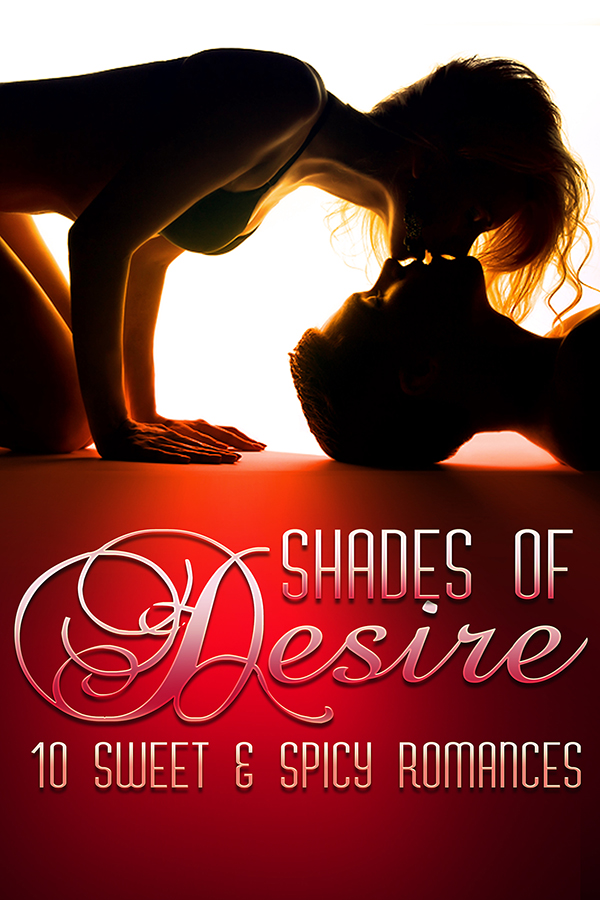
Today I’m pleased to host romance author Kristina Knight, who’s here to share some insight into her work as well as some info about a great 10-book boxed set, SHADES OF DESIRE, coming out June 8th!

Kristi1

What drew you to writing romance when you first started out?

I’ve always loved romances. As a kid, I gravitate toward happily-ever afters and then as a teen I found a stash of my grandmother’s Harlequins and devoured them. So it was a natural step to start writing them, too. 

Your tagline is “Contemporary Romance with Sass”. What does this mean to you as an author?

For me, it means a heroine who knows what she wants and, even if what she wants scares her a little bit, is going to go after it. Also, most of my characters (heroes and heroines) are a bit smart-alecky because what’s life without a little snark and sass?

What are your favorite types of heroes and heroines to write about?

The broken ones! The characters who seem to have everything figured out and then…realize they don’t. Those stories are so satisfying as both a reader and a writer. I just love them.

You’ve written for Harlequin, Crimson Romance, and self-published a couple titles. Can you tell us a bit about how those publishing experiences worked for you?

My agent calls me a hybrid and I absolutely love it. My very first book (which became a series) was contracted with Crimson. I learned so much about my crutch words from my editors (thanks, Jennifer and Julie!!). I wrote another series, this time for Harlequin, and learned more about story development from my editor there (thanks, Ann Leslie!). What I like about working with my publishers is the support I get on covers and blurbs, advertising and promotion. Self-publishing is completely different – everything falls to me. Covers, editing, story development, advertising and promotion, and that is envigorating and challenging…for me, hybrid works.

Why did you decide to pursue self-publishing/indie-publishing for two of your titles?

One of my publishers was bought out by another and I didn’t feel the buy-out was in my best interest. So I took back that title. At the same time, I had a book with a publisher that was a bit of a hard sell, and I needed the ability to use pricing strategies and other indie tools to really take advantage of trends. Those two ‘experiments’ have been successful, and I’ll add more self-published titles this year. I’m really excited about it!

Every author has a favorite character. Who’s yours?

Gosh, that is so hard!! I don’t want to make any of my characters mad….let’s just say every one of them has a special spark for me.

What are some of the challenges you’ve faced on your journey to publication?

Rejection, rejection and rejection. Seriously. Rejection letters hurt. Revise-and-resubmit requests that are summarily rejected hurt. It’s hard to put your heart into a book and then learn no one wants to buy it. The key is to keep moving forward, keep improving on your craft and keep believing in your stories.

What advice would you give to aspiring and new authors?

Don’t give up. Writing is a hard profession and you’ll be told no way more often than you’ll be told yes, but don’t give up. Believe in yourself, believe in your stories and keep writing!

Is there anything you’d like to share about your next writing project?

I’m on deadline with my third book for Harlequin’s Superromance line and I’m so excited about it! At the same time, I’m getting ready to release a new trilogy of sexy romances set in the rock star world…it’s a fun time, for sure!

Tell us a bit about your upcoming release. What do readers have to look forward to in this great 10-book set?

Shades of Desire is such a fun book bundle! You’ve a little bit of everything from spicy contemporary to paranormal, a little suspense, some comedy and, of course!, happily ever afters in each one.

Shades Of Desire

Ten titillating tales from USA Today, bestselling and award-winning authors. Step into the world of some of the freshest voices in romance. From spicy secrets to sweet second chances. Come find your perfect shade of desire.


J.A. Coffey – Bestselling Author

LIAR, LIAR

Divorced certified fraud examiner Jessica Barlow catches liars for a living. Sparks fly when she’s assigned to investigate a dating website owned by a man determined to guarantee she finds love, even if he has to pretend to be a client!

Wendy Ely – USA Today Bestselling Author

DANGEROUS FLAMES

Sometimes good men are taught to do evil things and it takes the strength of a sheltered woman to make things right. When Gabi learns of her father, she is asked to leave for her own safety. Fine. She’ll go… but she is taking her secret love with her, even if it’s at gun-point.

Dorothy Callahan – Bestselling Author

A DECADE FOR DARIUS

Jess never forgot her first kiss, especially since it came from the guy who taught her everything she knows about antiques, her livelihood. But if she wins the priceless inheritance, Jess will risk losing Darius Covington all over again.

Diane Escalera – Bestselling Author

STILL HOT FOR YOU

Shay LaCosta screwed up a damn good marriage. Now she’s on a mission to get a little submission, and get her hunky husband back in her bed.

Lena Hart – Bestselling Author

HIS BEDPOST QUEEN

Athena Lewis has a sharp mind and an even sharper attitude. Except when it comes to “Davie,” the only man who’s ever truly made her feel safe. Yet to protect the only family she has left, she must embark on a mission that goes against everything she believes in, and that includes using the last trick she has left. Her body.

Chanta Rand – Bestselling Author and Debut Author of the Year

RESISTING DESTINY

Thrown together for ninety days by a spiteful judge, womanizing attorney, Cayson Sullivan and street-smart hustler, Destiny Jackson find the only thing they can agree on is their red-hot attraction for each other.

Emma Leigh Reed

TRUSTING LOVE

Pregnant and running from her abusive boyfriend, Chloe Wilder takes refuge in the sleepy coastal town of Arden. Police chief, Jayden Peterson, thinks the worst crime that could happen in Arden is jaywalking. Could the real danger be the two of them falling for each other?

Cindy Stark – Bestselling Author

WOUNDED

Battle-worn soldier, Jerry returns home intending to avoid his ex-fiancée. The shrapnel that wounded him pales in comparison to the gash she left in his heart. Kimber lost everything when she broke off her engagement, and she’ll fight to win him back.

Valerie Twombly – Bestselling Author

SPANISH NIGHTS

Armand has lost everything. His magic and his freedom are taken when an evil curse is placed on the Jinn, but a newcomer to town may be his savior. When evil emerges from the shadows, Makayla learns she must choose between her mortality and Armand’s freedom.

Kristina Knight – Bestselling Author

RIGHT NOW

Dumped by her celebrity boyfriend, unlucky-in-love author Casey Cash needs a break. But, between the male escort trying to get into her bed and the tabloid reporter intent on getting her story, Casey might have been smarter to stay in New York…


You can follow the Shades of Desire authors on social media:

Facebook: https://www.facebook.com/shadesofdesirebook

Twitter: https://twitter.com/shadesbundle

Handle: @ShadesBundle

Hashtag: #shadesofdesire


Shades of Desire Purchase Links:

Amazon: http://amzn.com/B00VQYVU1M

iBooks: https://itunes.apple.com/us/book/shades-of-desire/id983263845?mt=11

Kobo: https://store.kobobooks.com/en-US/ebook/shades-of-desire-2

ARe: https://www.allromanceebooks.com/product-shadesofdesire-1777727-166.html

B&N: http://www.barnesandnoble.com/w/books/1121700462?ean=2940152217230

Google: https://play.google.com/store/books/details/J_A_Coffey_Shades_Of_Desire?id=parkBwAAQBAJ&hl=en

Interview with Kerry Lynne, Author of Pirate Captain

Today I have a bit of a treat! Several months ago I had the opportunity to read (and enjoy) Pirate Captain: Chronicles of a Legend by author Kerry Lynne, and she has graciously agreed to let me host a blog interview about the book, her work, and what’s next in the series. If you’re a fan of pirates, you’ll probably want to keep reading.

*~*~*~*
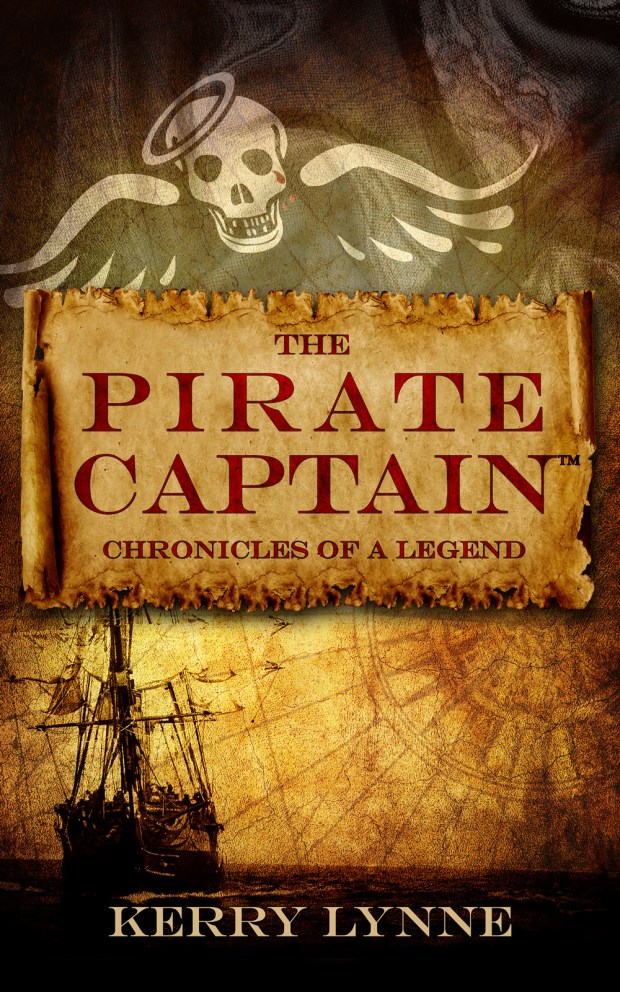
Pirate Captain: Chronicles of a Legend by Kerry Lynne

Image used with permission.

Pirate Captain: Chronicles of a Legend is your first novel. What inspired you to begin writing the story?

Like everyone else, I had written a lot in high school. A brutal English instructor in college put an end to it, however. The only thing I wrote for 30+ years after that was cryptic instructions and a few magazine articles. The pirate thing came out of the blue; I owe my husband for that one. He was watching Pirates of the Caribbean on TV for what seemed like forever. Finally, trying to be the good, dutiful wife, I sat down with him and watched. Jack Sparrow won me over; I was gone from there.

That was about the time I discovered there was such a thing as fanfiction (I know, late bloomer). Stories had been rolling around in my head for most of my life, but now I had a place to write, play, and most of all, learn. I was shockingly rusty. I owe my fanfiction friends a ton for a number of things, but getting me on the right path is at the top of the list.

I was merrily writing along for about five years, introducing a lot of new characters (not an easy path in fanfiction). Gradually, I found that I wanted to go places that the canon wouldn’t allow. Jack Sparrow faded into the horizon and Captain Nathanael Blackthorne stepped forward. My life hasn’t been the same since.

On that train of thought, I had my first request from someone wishing to write Pirate Captain fanfiction. The circle is complete!

With the recent popularity of all things pirate, what do you feel Pirate Captain delivers that sets it apart from other high-seas adventures on the market?

It’s not Romance, and it’s not a Treasure Island wannabe. No disrespect to either, but anything that I’ve been able to find currently out there (or from the last decade or so) tends to fall into one of those two categories. Sure, there’s a romance (with two hundred men and one woman aboard, how could you not?) but I’d like to think this book offers a lot more.

The plot of most books centers around the MCs’ quest to gain something. This book is a bit of a reverse. Whether they know it or not, Cate and Nathan start the book with getting what they want most. The story becomes about what they are willing to do to keep it.

So many people are fascinated by the tall ships and sailing, but they are grossly confounded by the lingo. This book is a stepping stone into that world. Patrick O’Brian or C. F. Forrester, for example, are great storytellers, but their books are a tough read for the landlubber. Hopefully, by the time one is done reading it, they feel like they at least know fore from aft and “their butts from a bitt,” as Nathan would say.

The “Hell’s Angels” aspect of pirates bothered me for quite a while, until I started to understand that pirates (a few deviant personalities aside) were just sailors trying to find a way to get through this world. Pirates were the first pure democracy, their captains (and often their officers) being elected. No venture was set upon without the approval of the majority. They were also the first limited corporation, their only pay being a share of the profits (swag or treasure). They were also the first to institute disability insurance, their ship’s codes often allowing extra money for the loss of fingers, eyes or legs.

Your main characters, Nathanael Blackthorne and Catherine Mackenzie, are flawed individuals whose troubled pasts have left them scarred inside and out. When developing your characters, what led to your decision to make them “less than perfect”?

Imperfect is ever so much more interesting, isn’t it? Where’s the interest in reading about perfect people, who have had charmed lives and everything has always gone their way?

I have to say first that my characters tend to develop themselves. First, I figure out what kind of a person I need, and then I work backwards, figuring out what personal traits or experiences would have brought them to be that way. Once I reach childhood, then I have to work forward again, because each trait or experience will have other consequences which I hadn’t planned on, like Cate’s horror of being held down or Nathan’s disinterest in food.

Nathan and Cate come from two diverse paths, and yet they share the same issue: trust, or more specifically, the inability to do so. Cate’s story is one of loss, starting with her mother dying when she was young, to losing her husband, home and life to a war. She doesn’t trust that Providence will ever allow her happiness. Nathan’s story is one of betrayal, starting with a father who never returned. There’s going to be two categories of readers: those who love Nathan and those who hate him.

My characters are forever changing. Perhaps “evolving” might be a better word. They are always surprising me, like Nathan’s sweet tooth. I had no idea, until in one scene he walked to the honey jar and stuck his finger in. There are times when I expect Cate to be a little stronger in the face of some hazard or tribulation, and she falters.

Nathan is an incredibly multifaceted character who takes the popular “Jack Sparrow” pirate captain mold and pretty much smashes it to smithereens. As new readers come to the novel, what do you hope they’ll take way from his characterization?

The comparison to Jack Sparrow is a natural one, since there hasn’t been such a popular pirate since Errol Flynn and Captain Blood. I realize that, as anyone picks up the book, they will be expecting some version of Jack. Hopefully, like you, the reader will soon see the vast difference between Jack and Nathan. As I might have mentioned earlier, I can’t explain where Nathan came from. He just stepped up off the page one day and refused to leave.

My hope is that readers won’t know whether they love him or hate him. I work by the guideline “if you want your characters to seem real then make them like real people.” That means with all the flaws and strengths; likes and dislikes; disappointments and desires; quirks and scars. The more you add, the realer they become. A writer has to be two-thirds people observer and one-third therapist. Diana Gabaldon calls it “cannibalizing,” a gross, but appropriate word, because that’s what a writer does: take in all these observations, chew them up, and then spit out a new character.

Conflict is the key, not only in the plot, but within the characters, as well. As someone once suggested, “What cage has the character put himself in?” is the question to ask yourself as the writer. Add to that the fact that the more you love your characters, the more you disrupt their lives, because you’re anxious to see how they will react and whether or not they will prevail.

Like any person, historical or modern day, Nathan is a product of his time. If life hadn’t taken such violent twists, he might well have been the dashing Errol-Flynn-type sea captain, with the world at his fingertips, and hence a fairly cliché character. But life wasn’t kind, and he’s wound up doing what he had vowed he’d never do. So now, not only is he fighting the enemy (of which he has several), he’s fighting himself. That sets up some great conflicts.

Pirate Captain is set in 1753, and there was a lot going on in the world at that time. Your level of research and dedication to historical accuracy shines through the narrative, but you manage to corral the history into what’s pertinent to the characters aboard the Ciara Morganse. How did you decide which historical elements to include?

Oh, dear! It wasn’t easy. I’m a Virgo, so details are everything. As everyone is probably well aware, after all that hard-earned research, you’re dying to show it all off. Not without a few tears, to be sure, I kept it down to only what I needed to tell the story, but I’d have to add “the way I wanted to tell it.” The minimalists (those who feel you should use only what is directly relevant to the plot, and nothing more) would point to a wad of things as unnecessary. But then, I’m not a minimalist <grin>. I incorporated what I needed to either underpaint a scene or flesh out a character. It helps that I’m not a linear writer; I’m a patchworker. I write whatever comes to mind each day, and then find where it fits into the grand scheme of things. It’s a good way for me to take the best advantage of the creative juices when they are flowing. Heaven knows we don’t want to interfere with that! It means that I’m always working back and forth, which gives me prime opportunities to weave in all those little juicy bits in.

The year 1753 was chosen, because of Cate’s backstory. I needed an event catastrophic enough to wipe away a person’s life: the Jacobite War of ’45 was perfect. That time frame, however, put the story after what is commonly known as the Golden Age of Piracy, so I needed Nathan’s backstory to accommodate that. That also allowed me the freedom to work without the expectations of encountering any of the more famous personalities. I intentionally avoided using real persons, although there are a couple names that slipped in. I preferred to use the time period as a backdrop, rather than a mold into which I had to fit the story.

The ignorant are always there for us writers to use. Using Cate’s POV was advantageous here, too. As she was being educated, so was the reader. At a certain point, however, that ploy becomes too obvious, so I had to find other ways of weaving in information. The nauticalese I incorporated only enough to give it flavor. In the meantime, the nautical purists will rip me open because I haven’t been entirely accurate on a lot of things. But again, it’s a delicate balance, because if I wrote to please them, I would have lost the landlubbers. I really wanted this book to lure the reader into the world at sea, show them that it doesn’t have to be such a confusing and scary place.

Who or what were your real life inspirations for the characters, ships, and locations?

Writing inspiration came from Diana Gabaldon. Whether she knows it or not (I have told her a couple times) she’s responsible. Some say nothing happens without a reason. A friend recommended her books to me. That was the first time I found myself thinking “I want to write like that!” It was several years after before I actually started writing again, but her generosity with those trying to learn and her pragmatic approach was a godsend. She’s also the one who gave me permission to not write linear, as everyone had been telling me I had to do up until then.

What was the most difficult aspect of researching the setting, personalities, and nautical jargon?

I see too many historical fiction writers being handcuffed by history, worried about all the things that has to be. I prefer to look at it as what could be. These were just people, with all the fears, dreams and motivations as people today.

Having sailed for over 30+ years helped; I’m not sure I would have attempted this without. At the risk of stepping on a few toes, I’ve read several attempts by writers who didn’t know anything about ships or sailing and it showed. The same thing goes for pirates: if you’re going to write about them, then you’re obliged to include all the sailing stuff, including the lingo. For men of the sea, ships and sailing is more than just a part of their lives: it’s them. To ignore it is to ignore the core of the character.

My biggest challenge was trying to understand the workings of a square-rigger. Once I figured out what their greatest concerns were at sea (for the most part, getting caught with too much sail aboard or with land in their lee), then I had a fair grasp, although there’s still so much to learn.

My most valuable tool was a gift from a dear friend: the entire audio set of Patrick O’Brian’s Master and Commander series. It was invaluable in getting the ear tuned to the 18th Century way of speaking. Listening helps in ways that reading never can, when it comes to that. The version narrated by Patrick Talb is wonderful, for not only the nautical jargon, but the various English (as in England) dialects.

I tried to incorporate as many of the mariner’s sayings as I could, because these men still live with us today: bone in her teeth, chewing the fat, chocked full, bitter end, let the cat out of the bag, scuttlebutt, slush fund, worth his salt, three squares a day… The list goes on and on. A glossary can be found at the back of the e-book version or at our website www.piratecaptain.net for the print version.

It’s been suggested that I might be channeling people from the past, because there is so much of this book that I have no idea where it came from. There are whole passages that I look back at and wonder who wrote it. I can’t begin to explain Nathan’s turn of the tongue; I rarely know what’s going to fall out of his mouth.

There’s a love story woven into the rich narrative, but Pirate Captain isn’t a traditional romance by any means. What challenges have you faced in writing this book in that regard?

No, it’s most certainly not traditional, but then these aren’t traditional romance characters either. I’ve had several readers comment that the opening scenes of when Cate is first brought aboard the Ciara Morganse made them realize this book was different.

Again, staying mostly in Cate’s POV worked well. If we knew what Nathan was thinking in Chapter 2, there would be no more mystery, would there? The surprise, the tension and everything would be gone. It’s the not knowing that makes the heart flutter. Does he or doesn’t he? Will he or won’t he? If Cate and Nathan were to suddenly drop all their defenses and declare everlasting love and fall into bed together by Chapter 4 it would have been completely out of character. The reader wouldn’t have known either of them enough to care whether they did so or not.

A therapist once told me a person’s strengths are very often their weaknesses. The very things that a person relies upon will also lead to their biggest problems. Cate and Nathan are both survivors, achieved mostly through stubbornness. But it’s also their downfall when it comes to a personal life. Nathan’s ability to hide his thoughts makes him a great captain, but it also makes it impossible for Cate to see inside.

The greatest challenge often comes from within yourself, the writer. In the spirit of doing what the story calls for, you often have to face down your own fears and whatever issues you might have. It’s not always easy. As a historical fiction writer, you also have to get past all your modern day biases and compulsions. No, in the 18thC they didn’t wash their hands before every meal. And no, they didn’t refuse to eat something, because it hadn’t been refrigerated. No, they didn’t send for a doctor if someone broke a leg. If you can’t get yourself past that, then you need to find a different era about which to write, because you’re not going to be able to be truthful with yourself or your readers.

Nor Gold is the next installment in the Pirate Captain series. Can you give us a sneak peak into what’s in store for Nathan and Cate? When is your projected release date?

I’m about half finished with Nor Gold; hopefully it will be out about this time next year.

Without being too spoilerish, Thomas becomes a more central figure. There will be much more of both Cate and Nathan’s backstory, which comes around to haunt them. There will be a bit more in the way mystical, which ties in with Nathan’s backstory. The nautical world is filled with lore and superstition. They were simple people; what phenomena they didn’t understand they attributed to some god or superstition.

More and more, Nathan discovers that what he wants most is going to become more and more impossible to have. Suffice to say, nothing is ever going to go smoothly with these three.

Several hints have been dropped in book one, Nor Silver… the reader just has to find them. <grin>

How many books do you anticipate will become part of the Pirate Captain series?

God be willin’ and the creek don’t rise, I’m looking at four or five books right now, but there’s a good chance that will grow. Even if no one is reading, I’ll still be writing, because I can’t imagine leaving Cate and Nathan behind.

The back cover copy of Pirate Captain gives us Nathan’s take on the set up of the story, but most of the narrative is told from Cate’s point of view. Will we get to see more events through Nathan’s eyes in subsequent volumes?

Ugh! Those blurbs always sound so Madison Avenue sales pitch. Instead of the traditional third person impersonal, I used Nathan’s narrative, because I thought it would better represent what the reader could expect: something different.

As for seeing more events through Nathan’s eyes? Oh, dear, yes I’m afraid so. It’s going to be a challenge for both me and the reader. There’s no holding Nathan back once he gets on a tear.

Again, without being too spoilerish, the first part of Nor Gold will be in his POV. There’s a fair-sized stretch at the end that the reader will be in his head. A good portion of the third book will be in his POV as well.

You’ve been receiving great reviews on Amazon and Goodreads. How has this feedback helped as you continue with Nathan and Cate’s story?

As a writer, you dream of bunches of great reviews. The irony is when you hear people don’t believe it if it’s all five-star reviews. They think it’s all friends and family. So I guess we need to hope for a few people to rip your work apart. <wry grin>

Like any writer, some positive feedback always fuels the fires to keep going. The Demon Self-Doubt is always firmly entrenched on my shoulder. I would be writing, however, even if no one was reading, because Nathan is jumping up and down for his story to be told, and there’s no putting him off.

A lot of authors are gravitating toward increasingly accessible self-publishing options to get their work in the hands of readers. What led to your decision to self-publish rather than pursue a traditional publishing contract?  What are some of the rewards and challenges of that decision?

Timing was a big thing. Pirates are popular now. Three or four TV channels are planning or already filming pirate series or mini-series. Starz Channel has already signed their mini-series Black Sails for a second season, before the first season has even aired. Spielberg has bought the rights to Crichton’s Pirate Latitudes, and I understand the rights to Pirate Hunter (Captain Kidd’s story) has been purchased as well. Pirates of the Caribbean 5 is on deck to start filming this winter, to be released in 2015. Rumor has it that they will be filming 6 at the same time. I didn’t feel as though I had the couple years it takes to work your way from agent to being picked up by a publisher to actually hitting the shelves.

The couple online writing sites that I hang out at did a very fine job of convincing me that I’d never be able to sell a book so large (in the vicinity of 350,000 words). Still, I’m toying with spamming out some query letters and see if anyone will bite.

It’s still early; I have no way of knowing if this book is going to be able to find its audience. The trick is getting it in front of the reader. As you’ve probably heard a kazillion times, it’s really tough for a book to rise above the morass of others and be noticed. Bookstores are really reluctant to pick it up. There is every thing from animosity to contempt for self-pubbing. The attitude is swinging around a bit, but you still have a lot of prejudice to live down.

I have a couple reviews pending that should prove significant (assuming they like it <grin>).

What advice would you give to new authors?

Know yourself and your audience, and write to please them. Write the book you would like to read, because there is a good chance a good many others feel the same way. The more you try to please everyone (which is an impossibility) the more watered down the work becomes.

The online writing and critting sites are fine, but sooner or later you have to take ownership of your work. Don’t be snowed by all the rules. The best “rule” is one Diana Gabaldon uses: “You can do anything, so long as you do it well.”

Think outside the box. Characters and plots become cliché only because they have been done the same way over and over. There’s nothing purely original; finding a different way to present it makes it yours and unique.

If you’re struggling with a scene, chances are it’s because you’re trying to get the characters to do something they don’t want to do. Sit back and ask them; perhaps you don’t know them as well as you think. <g>

Okay, this question’s really just for fun. Some fans have deemed Pirate Captain worthy of a film adaptation. Until Hollywood comes knocking on your door, do you have a “dream cast” in mind?

I’ve had several people suggest that very thing. Judging from what I’ve seen Hollywood usually does to a book, I’d rather not. It would take a lot to get me to hand my characters over to someone else.

I don’t work with specific character pictures, but then I’ve written it as if it was a movie playing in my head.

Of course, everyone thinks Johnny Depp should be Nathan, but that’s probably because there hasn’t been another popular pirate movie since Captain Blood. I’ve had some suggest that Maureen O’Hara would make a great Cate. At one point, I had Catherine Zeta-Jones in mind, mainly because she has a body type more typical of a woman, as opposed to those refugee-from-a-prison-camp types that Hollywood seems to think we should admire. Bo Hoskins would make a good Mr. Kirkland. The crew would be a field day for all those great character actors out there. The more elder Sean Connery would make a great Mr. Pryce. And Thomas? Hmm…. Not sure there.

What takes up your time when you’re not sailing the high seas with Nathan Blackthorne and Company?

I write nearly every day. There are index cards and little scraps of paper everywhere. If I can think clearly enough to write, then I edit.

We spend a month every summer on our sailboat on the Great Lakes. We aren’t saltwater sailors, much to everyone’s surprise. I was an artist and loved doing needlework (crazy quilting mostly) but lost the fine motor skills in my hand, so I’m not able to do any of that. I live in hope it’ll come back one day. Otherwise, I’m out in the garden venting my pent up energy on the weeds.

If readers are interested in learning more about the Age of Piracy, what resources would you recommend?

First of all, I’ve banned Wikipedia from my existence. It’s fine, if you use the footnotes to find primary resources, but as an end-all resource, not so much. I’ve found far too many errors. I also prefer the print version of a book, as opposed to online. There’s nothing like those little treasures you discover as you’re thumbing through the pages!

For Pirates:

David Cordingly is the going expert. His book Under the Black Flag is a great resource.

The Sea Rover’s Practice by Benerson Little is good as well. 

Choundas’ The Pirate Primer is invaluable for pirate-speak (and 18th Century mariners in general)

The Pirate Dictionary by Terry Breverton is just plain fun, with a lot of mariner and pirate-speak.

For ships and sailing,

The Young Sea Officer’s Sheet Anchor

The Seaman’s Friend by Richard Dana (of Two Years Before the Mast fame) 

A Sea of Words by Dean King was written as a lexicon for the Patrick O’Brian series, but has a lot of relevant information.

Seamanship by John Harland

Thanks so much for your time!

It was my pleasure. I’m always dying to talk about this passion and the characters it has brought me.

On a closing note, I’d like to tell everyone that I’d love to hear what you think of the book, good, bad or indifferent. There’s not much that can be done to change this one, but I am working on a second. I’m not setting myself up as an expert, but if anyone has any questions about ships, sailing or pirates, email me at klynne@piratecaptain.net.

*~*~*~*

For more information about the Pirate Captain Series, or to commandeer a copy for yourself, visit Kerry and the crew of the Ciara Morganse, visit PirateCaptain.net or check out the Pirate Captain page on Facebook.

Print and e-book versions of Pirate Captain: Chronicles of a Legend are available on Amazon and Barnes & Noble.
Book Review – Cephrael’s Hand by Melissa McPhail

So you’ve probably noticed I’ve been participating in this week’s whirlwind blog tour, run by Novel Publicity, of Melissa McPhail’s hugely epic fantasy novel, Cephrael’s Hand.  I also had an opportunity to read this book, and now you get to hear my take on it.

Now, I do have to put a slight disclaimer out there that fantasy generally isn’t a genre I read extensively.  Too often, I find myself feeling let down by fantasy novels that seem to have taken every archetype and plot point from, say, Tolkien’s Lord of the Rings.

Fortunately for me as a reader, and as a reviewer, I didn’t feel that way when reading Cephrael’s Hand.

The premise drew me in from the get go. The story boasts an impressive (and sometimes staggeringly confusing) cast of characters – it took me a while to get everybody straight in my head.  Throughout much of the first several chapters, we follow a series of seemingly parallel stories with different characters.  At first, you wonder what it is that ties everyone together, and the only thing they all seem to have in common is the awareness of a certain constellation showing up in the night sky – a constellation known as Cephrael’s Hand.  Most of the people  who see it have a similar reaction – its appearance doesn’t bode well for those who perceive it.

But that’s just surface stuff, at least at the beginning.  Throughout the course of these parallel stories, things start to intertwine. There’s political intrigue, a sometimes more than metaphorical war between belief systems and people’s perception of how the universe works.  And there always seems to be one piece of the puzzle, the key to understanding everything, that’s tantalizingly just out of reach – not just for the characters, but for the reader as well.

For me, Cephrael’s Hand was the meaty sort of read I enjoy, regardless of genre.  Melissa McPhail definitely did her homework in creating this world, which in many ways is familiar to the world we know. She pulls aspects of different languages, like Farsi, in creating the languages of her characters, and while there is a variety of fantastical elements, the landscape and characterizations ring true to life.  Her descriptions are full and beautiful, and she delicately weaves a strange but thought-provoking dance between science, mysticism, and magic.  At times, the dialog feels a little archaic, but only in that McPhail uses the sort of phrasing that would have been found in nobler days – there’s a formality in the cadence of every speaking character, and it’s not just in the sparse use of contractions.  Still, the characters are approachable and engaging.

The cast of characters, once I got everyone straight, provided excellent perspectives on the progression of the story, and as I read and the parallel plots wove together, the relationships – be they familial or adversarial – became clearer and clearer for me.  McPhail did a good job putting me into the heads of her different POV characters, making me wonder about them, root for them, shake my head at them, and most importantly, want to know what happens to them next.

Cephrael’s Hand isn’t what I’d call an easy read, not something I’d want to take to the beach on vacation.  But it’s a great read for a cold, windy winter evening, the sort of book you can wrap yourself up in and get lost in.  I never felt like I was reading a mediocre retelling of LOTR, which is high praise from me when it comes to fantasy (since I measure just about all fantasy by Tolkien’s work). Cerphael’s Hand stands on its own, and for people who enjoy high fantasy, it’s well worth it.

~~~~~~~

Cephrael Tour BadgeAs part of this special promotional extravaganza sponsored by Novel Publicity, the price of the Cephrael’s Hand eBook edition is just 99 cents this week. What’s more, by purchasing this fantastic book at an incredibly low price, you can enter to win many awesome prizes.

The prizes include a Kindle Fire, $450 in Amazon gift cards, and 5 autographed copies of the book.

All the info you need to win one of these amazing prizes is RIGHT HERE. Remember, winning is as easy as clicking a button or leaving a blog comment–easy to enter; easy to win!

To win the prizes:

  1. Purchase your copy of Cephrael’s Hand for just 99 cents
  2. Enter the Rafflecopter contest on Novel Publicity
  3. Visit today’s featured social media event

About Cephrael’s Hand:  Two brothers find themselves on opposite sides of a great battle, neither knowing the other is alive… A traitor works in exile while preparing for the disaster only he knows is coming… A race of beings from beyond the fringe of the universe begin unmaking the world from within… And all across the land, magic is dying. Cephrael’s Hand is the first novel in the award-winning series A Pattern of Shadow and Light. Get it on Amazon or Barnes & Noble.

About the author: Melissa McPhail is a classically trained pianist, violinist and composer, a Vinyasa yoga instructor, and an avid Fantasy reader. She lives in the Pacific Northwest with her husband, their twin daughters and two very large cats. Visit Melissa on her websiteTwitterFacebook, or GoodReads.

Cephrael’s Hand – Interview with Author Melissa McPhail

Please enjoy this interview with Melissa McPhail, author of the spellbinding epic fantasy, Cephrael’s Hand. Then read on to learn how you can win huge prizes as part of this blog tour, including a Kindle Fire, $450 in Amazon gift cards, and 5 autographed copies of the book.


1. Your debut novel, Cephrael’s Hand was the winner of The Written Arts Award for both the best fiction and the best Sci-Fi/Fantasy categories–congratulations! So tell us, what was the inspiration behind this story, and can you tell us a little bit about it?

I started the first version of Cephrael’s Hand when I was going through a difficult time in my life. I needed the cathartic joy that I’d always found in writing. I didn’t set out to write a novel—just to write. That first draft had no planning, no world-building, no design. It was pure creative inspiration. And it was awful!

But the characters… I had brought them into being, and they insisted that they had a story to tell. It took my growing as a writer—and over a million words tossed into the trash—to finally tell their story properly.

Cephrael’s Hand is the result of a philosopher’s approach to fantasy. It’s the story of one man’s steadfast determination to save the realm he swore to protect, and his willingness to do anything it takes to accomplish that end—even to betray those he loves. It’s the story of the unlikely pieces (men and women) who unknowingly fall beneath his shadow, and of the players who follow him. Ultimately, it’s a story of salvation.

I see fantasy as a metaphor for life in this world. We all face tests of our honor. We’re all working to accomplish our goals and flourish and prosper. Few of us set out to do evil. Yet evil is done. Goals are abandoned. Integrity is compromised. We totter precariously on thin wires as we move through the labyrinth of life. I strive with my series to illuminate those wire-thin paths, that we might find solid ground beneath them.


2. Without giving away too much, can you reveal what’s in store for the readers when they crack open Cephrael’s Hand?

If you listen to my critics—too many characters! But this is an epic fantasy dealing with a conflict that spans multiple kingdoms. It takes a team to save the world. 😉

Hopefully you’ll meet interesting characters and a world you can easily find your own place within.  You’ll discover pirates, princes, star-crossed lovers and philosopher-soldiers. You’ll see many characters who are not as they appear, and a few who are exactly as they seem. You’ll find adventure on a perilous road with prince Ean val Lorian, and farcical escapades with Trell of the Tides and the pirate Carian vran Lea.

You’ll often wonder who is good and who is evil—because most villains in real life are cloaked in shades of gray.


3. Can you tell us more about some of the key concepts that inspired the world of Cephrael’s Hand?

The story is crafted out of many of the philosophies I’ve studied. As I was planning Cephrael’s Hand, I had been reading about game philosophy. Game philosophy speaks on the importance of games in our lives and takes a look at their composition (barriers, purposes and freedoms) and their anatomy (pieces, players, maker of games). It’s a compelling concept with abundant applications, and I became immediately interested in exploring the ideas more via the story of Cephrael’s Hand.

Balance is another concept that threads throughout the story. Exploration of this idea comes out of my study and practice of yoga. If ever a concept permeates our lives, the pursuit of balance is one. Whether seeking to balance work and parenthood, our social commitments and our private lives, or even just the juggle of that list of a thousand things we’ll never get to, every one of us is seeking balance in some fashion. Placing this concept within the framework of a fantasy story embellishes it with a magical lure.


4. The Cephreal’s Hand constellation plays an important role in the book. Is there a real life constellation that plays a similarly important role in your life? 

I can’t say that a particular constellation is important to me personally, though I’ve studied Astrology for many years. But I’m drawn to the idea, both scientifically and philosophically, that we are all connected somehow with each other and the broader universe. String Theory and General Relativity play to this idea from the perspective of science. Certainly, if we are connected to the stars in some esoteric way, then the actions of the stars can impact us. Astrology believes this, and the graphing of natal charts proves an underlying truth in this ancient, mystical and often misunderstood science. Philosophies far and wide declare that we’ve descended or separated from a universal oneness and teach karmic values with the intent of helping us return or re-ascend to that harmonious state.

The concept of Balance in Cephrael’s Hand stems from this idea of universal connectivity.


5. Ever since a linguist named Tolkien came along, language has been a very important aspect of the epic fantasy genre. What inspired the various languages in Cephrael’s Hand?

The desert languages are based on Farsi or Arabic, depending on the tribe. Farsi is one of the oldest  languages still in use today, and its traditions lent themselves well to the Kandori culture, which is one of Alorin’s oldest races. Likewise Arabic, being originally a language of the nomadic tribes, seemed the correct base from which to draw the language of the Akkad.

Even older than both of these languages in my novel is Old Alaeic, which is the original language of theangiel, the Maker’s blessed children, and of the two original races: the zanthyrs and the drachwyr. Old Alaeic draws primarily from Gaelic root words. I chose Gaelic because the language maintains some of the earliest roots of our Indo-European linguistic heritage. Its spellings and pronunciations are almost universally reminiscent of mythological beings from ancient times and are often associated, especially in the fantasy genre, with elves, Druids or other mystical races.


6.  Which other authors have served as influences and inspiration for your own work?

I love lyrical writing, so my bookshelves host an eclectic mix (albeit heavily weighted with fantasy and science fiction). Those who first come to mind from the fantasy genre are Anne Rice, Patrick Rothfuss and Jacqueline Carey, all of whom carry on a great and fabulous romance with the English language, much to the ecstasy of millions. Being able to string words like pearls into a story that reads at times like poetry in motion seems the greatest pinnacle of storytelling skill.


7. It’s been said that one of the most time-consuming processes of writing epic fantasy is world building.  Without giving too much away, what are a few of your favorite world aspects and what inspired them?

As I wrote in a recent guest post, world-building and the magic system developed for the world are intimately connected. We can’t really describe a fantasy world without talking about the magic that rules it, because so much of what we understand about the world derives from our understanding of how the physical laws of the world work.

In creating my world of Alorin, I established five “strands” of the lifeforce known as elae. These strands are a way of describing and codifying the lifeforce which is the source of energy in the world, but they are only one way of describing it. While most of the viewpoints I am writing from agree with describing the lifeforce in terms of “strands,” there are other races in Alorin who have codified it differently, darkly, or with less purity for lack of philosophical simplicity.

I love exploring different viewpoints and imagining how each would describe a universal energy. I love examining the cultures that seek to describe this energy and how their ideals might alter their understanding of it. For example, the Adept race believes that Adepts are born with the ability to work one of the five strands, but only one. Yet some of the “Wildling” races are known to be able to innately work more than one strand.

The Fhorgs race works blood sacrifice to fuel their magic. Would their magic work without such sacrifice? The Adepts believe that it would. Yet within the Adept philosophy, a working of magic requires faith both in the existence of power and in one’s ability to manipulate it. If the Fhorgs don’t believe themselves able to wield the lifeforce without letting blood, it follows that magic would become unavailable to them simply because of their lack of belief. Moreover, because the Fhorgs don’t limit their ideas of their magical ability to a five strand approach, it’s possible they might achieve more through the wielding of it–or not. These are existential questions for these two races, questions which set them at odds with each other. Questions from which derive conflicts and persecutions, intrigues and betrayals.

Such explorations fuel both world-building and magic-system building, because their delineation establishes how the world works, how the people of the world interact with the energy that fuels it, how they interact with each other, and how they use the energy itself to work arcane acts.


8. You grew up in a house full of musicians, but your creativity emerged in the form of writing. Have you always felt called to write?

I always thought I would end up with a career in music like the rest of my family. I grew up harboring such an appreciation of these accomplished, classical musicians all around me, it seemed a natural course to follow in their footsteps.

Instead, I stumbled into writing the way one sometimes bumps into providence, colliding with it accidentally. I happened to take a creative writing class in high school. My creative writing instructor believed the best way to teach writing was to send her students out to actually write. So I did—hundreds of pages over the next few years. Writing became both an outlet for my creativity and the escape reading had always provided. I know I share that love affair with many authors.


9. At one time or another, most writers hit the wall and their work stalls because of the dreaded writer’s block. What do you do to get around or over this mental wall to resume writing?

Usually I turn to music—either composing it or listening to it. If I can find a great new song, sometimes that will help inspire me out of the hole. When a scene just isn’t working, I’ve learned to go back to where I was last doing well in the story and scrap everything that came after. It’s an agonizing process, but often necessary.


10. The Dagger of Adendigaeth, Book 2 in your series, has just been published. How has your vision expanded from book 1 to book 2, and what kind of creative growth have you experienced in your process this second time around?

We grow as writers with every novel—at least I believe that’s the goal. Many of the things I gained in writing The Dagger of Adendigaeth are intangible, ineffable understandings of myself and my creative process. I think of those times of being fabulously, fantastically stuck and the final moment of inspiration that launched me out of that depressing well. I think of the plot twists that came to me completely without warning, and the absolute magic that is the creative process.

The thing I loved most about writing this book was being able to explore so many viewpoints—especially the viewpoints of those characters who might be viewed as antagonists. But I don’t and never have seen them that way. It’s my greatest purpose in writing this series to be able to show the motivations and ideals that mold and shape each character. The more we can understand each other, the closer to a peaceful coexistence we will find, whether in the microcosm of our lives or the broader political and religious zones.


Cephrael Tour BadgeAs part of this special promotional extravaganza sponsored by Novel Publicity, the price of the Cephrael’s Hand eBook edition is just 99 cents this week. What’s more, by purchasing this fantastic book at an incredibly low price, you can enter to win many awesome prizes.

The prizes include a Kindle Fire, $450 in Amazon gift cards, and 5 autographed copies of the book.

All the info you need to win one of these amazing prizes is RIGHT HERE. Remember, winning is as easy as clicking a button or leaving a blog comment–easy to enter; easy to win!

To win the prizes:

  1. Purchase your copy of Cephrael’s Hand for just 99 cents
  2. Enter the Rafflecopter contest on Novel Publicity
  3. Visit today’s featured social media event

About Cephrael’s Hand:  Two brothers find themselves on opposite sides of a great battle, neither knowing the other is alive… A traitor works in exile while preparing for the disaster only he knows is coming… A race of beings from beyond the fringe of the universe begin unmaking the world from within… And all across the land, magic is dying. Cephrael’s Hand is the first novel in the award-winning series A Pattern of Shadow and Light. Get it on Amazon or Barnes & Noble.

About the author: Melissa McPhail is a classically trained pianist, violinist and composer, a Vinyasa yoga instructor, and an avid Fantasy reader. She lives in the Pacific Northwest with her husband, their twin daughters and two very large cats. Visit Melissa on her websiteTwitterFacebook, or GoodReads.

Cephrael’s Hand – Guest Post

Please enjoy this guest post by Melissa McPhail, author of the spellbinding epic fantasy, Cephrael’s Hand. Then read on to learn how you can win huge prizes as part of this blog tour, including a Kindle Fire, $450 in Amazon gift cards, and 5 autographed copies of the book.


My Take on Magic Systems

A guest post by Melissa McPhail


One of the most enticing aspects of writing fantasy is developing a magic system. The author’s magic system is inextricably woven into their world and contributes greatly to the reader’s vision of the world overall. The way a system is created either makes the world seem real or unreal, depending on how well the author has grounded the system with laws and limitations.

For example, scientists in our own world have defined laws—inertia, gravity, the periodic table—that describe the physical limitations and properties of energy. We don’t expect a stone to rise upwards when we throw it, but we might believe it could float if it were somehow made of helium. Likewise in a fantasy world, it’s important to codify the system with laws and rules (and to stick to those rules once established), to set boundaries for what the magician can and cannot do with magic, and to establish consequences for and ramifications of magical misuse.

This all shows that magic systems require significant thought and research on the author’s part to develop realistically. Yet for all of this, the manner in which one might design and describe the magical process is potentially limitless—there are as many magical systems as there are fantasy novels, and equally as many readers eager to pontificate on their pros and cons and/or to organize the systems into categories and types.

The one thing most magic systems have in common, however, is that they all handle energy. Whether that energy is spiritual, omnipotent, corporeal, or derives from physical objects or living things, the working of arcane arts surrounds the manipulation of energy.

I designed the magic in Cephrael’s Hand based on scientists’ existing understanding of electrical fields. The process of thought has been scientifically proven to produce energy, and human bodies are known to generate electrical fields. For the magic in Alorin, I proposed that all living things produce a metaphysical energy which is formless but which flows across the world in natural currents. This energy is called elae. This is the energy a magician of Alorin uses to produce arcane workings. How he does this is the creative part.

In Cephrael’s Hand, all things are formed of patterns. A single leaf derives its pattern from the larger pattern of its motherly oak. The snowflake harbors the pattern of a storm. Rivers form patterns that mimic the pattern of the world, and a living man harbors within him the pattern of his immortality. These inherent patterns collect and compel energy (elae) toward a certain purpose—growth, action, states of change.

To compel energy, a magician of Alorin (called a wielder) must learn to first identify and then usurp control over the pattern of a thing in order to command it. This is a laborious process requiring a lifetime of study.

Unlike wielders, the Adepts in Cephrael’s Hand are born with the ability to manipulate certain patterns. Adept Healers can see creation patterns (life patterns) and mend them where they’ve become frayed. Truthreaders can hear certain thoughts and read minds to see what a man saw versus what he says he saw. Nodefinders have the ability to move long distances with a single step by traveling on the pattern of the world. And Wildlings tap into a variant aspect of the lifeforce called elae to shapeshift or even skip through time, among other intriguing talents. The last type of Adept can sense the patterns of nonliving things—stone, air, water, fire, etc.—and use those patterns to compel the elements themselves.

Adepts are limited by nature of their birth—they can only inherently work one category of patterns.  They are limited by their training, their inherent intelligence, talent and ability. And of course, like us in real life, they are limited by their own vision of their capabilities.

Above all of these limitations, we find Adepts limited by “Balance.”  The concept of Balance draws from my studies of Eastern philosophies. It is the high governing force, the yen and yang, karma, cause and effect, fate. It’s as esoteric and arcane as these concepts imply. How far can the Balance be pushed in one direction without lashing back at the wielder? Which actions stretch it and which ones defy it? Balance is a complex and complicated subject—as difficult to define as our own world’s myriad competing religions. The only real agreement on the subject of Balance is that all magical workings stretch the Balance to some degree. Understanding how far they can be stretched without snapping is central to survival in the arcane arts.

The concept of Balance provides, well, the “balancing” force to all magical workings in Cephrael’s Hand and is central to its plot. You see, the entire realm of Alorin is out of Balance and magic is dying—and the Adept race dies along with it.


Cephrael Tour BadgeAs part of this special promotional extravaganza sponsored by Novel Publicity, the price of the Cephrael’s Hand eBook edition is just 99 cents this week. What’s more, by purchasing this fantastic book at an incredibly low price, you can enter to win many awesome prizes.

The prizes include a Kindle Fire, $450 in Amazon gift cards, and 5 autographed copies of the book.

All the info you need to win one of these amazing prizes is RIGHT HERE. Remember, winning is as easy as clicking a button or leaving a blog comment–easy to enter; easy to win!

To win the prizes:

  1. Purchase your copy of Cephrael’s Hand for just 99 cents
  2. Enter the Rafflecopter contest on Novel Publicity
  3. Visit today’s featured social media event

About Cephrael’s Hand:  Two brothers find themselves on opposite sides of a great battle, neither knowing the other is alive… A traitor works in exile while preparing for the disaster only he knows is coming… A race of beings from beyond the fringe of the universe begin unmaking the world from within… And all across the land, magic is dying. Cephrael’s Hand is the first novel in the award-winning series A Pattern of Shadow and Light. Get it on Amazon or Barnes & Noble.

About the author: Melissa McPhail is a classically trained pianist, violinist and composer, a Vinyasa yoga instructor, and an avid Fantasy reader. She lives in the Pacific Northwest with her husband, their twin daughters and two very large cats. Visit Melissa on her websiteTwitterFacebook, or GoodReads.